
How to Substitute Yarn in a Knitting Pattern
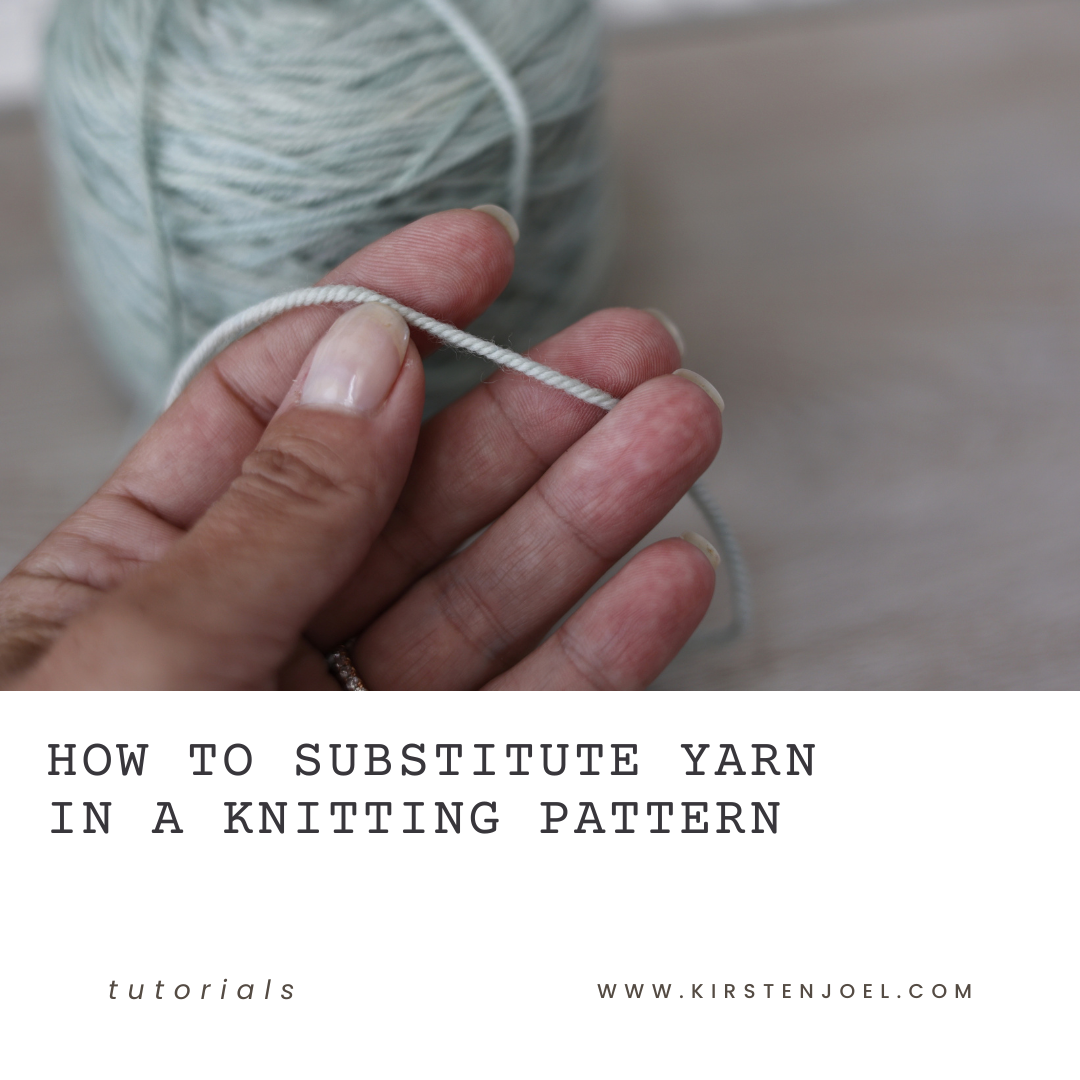
How to Substitute Yarn in a Knitting Pattern
Every pattern starts with a problem. Sometimes it's realizing you don't have the right sweater in your closet. Sometimes it's opening up a pattern you've been wanting to knit for years, only to find the yarn it calls for doesn't exist anymore.
That second one happened to me recently with my own Semilla Cardigan. The original yarn, Brooklyn Tweed Loft, was discontinued, which meant real decisions had to get made about what would actually replace it.
Here’s what I want you to take away from this article: a good yarn substitute matches the original in weight and gauge. Everything else is personal preference, but you need to be aware of a few nuances.
Why Yarn Substitution Isn't Just "Pick Something Similar-Looking"
It's tempting to substitute yarn based on color or price alone, but usually, the pattern was designed around specific properties of the original yarn - how it drapes, how it blooms after blocking, how forgiving (or unforgiving) the tension is. Swap those properties out without noticing, and you can end up with a finished piece that technically matches the pattern's instructions & measurements but doesn't look or feel anything like the sample.
Helpful Tools for Finding a Yarn Substitute
A couple of tools make the search for an appropriate substitute easier:
YarnSub.com lets you search a specific yarn and instantly see a list of comparable substitutes, ranked by how closely they match weight, fiber content, and yardage.
Ravelry's yarn database has a powerful advanced search. You can filter thousands of yarns by weight, fiber content, yardage, and even needle size, which makes it easy to build your own shortlist of candidates when a specific yarn isn't available.
Both are worth bookmarking before you're standing at your stash wondering what could possibly work.
What to Check Before Substituting Yarn
Yarn weight. This is non-negotiable. A pattern written for DK-weight yarn won't produce the same finished fit, look, and feel as a worsted weight yarn. Even if you do get gauge, the density of the fabric will be different. Always match the original weight category as closely as possible.
Fiber content and how it affects drape. Different fibers don't just feel different, they behave differently on the body over time. Wool has natural elasticity and "memory," so it tends to hold its shape. Alpaca, on the other hand, lacks that same elastic recovery and has a longer fiber staple, so it tends to relax and grow after blocking. Alpaca also tends to keep stretching under its own weight the more it's worn. That growth shows up specifically in row gauge, so an alpaca-heavy substitute for a wool pattern may knit up fine on the needles and then noticeably lengthen once it's blocked, or even after a few wears. If you're substituting toward an alpaca blend, it's worth blocking your swatch and letting it hang for a few days before trusting the row count.
Superwash vs. non-superwash. This matters more than it seems. Superwash treatment strips or coats the microscopic scales on wool fibers so they won't felt in the wash, but that same treatment also removes some of the fiber's natural grip and elasticity. Superwash yarns tend to be a little more slippery to knit with, show less crisp stitch definition (especially in cables and texture), and drape more heavily, with more growth over time than a non-superwash yarn of the same weight. If a pattern relies on non-superwash wool for structure or stitch definition, a superwash substitute can change the finished look more than you'd expect. You can knit with either, but you should know the impact of your decision before you cast on.
Micron count and softness. Micron count measures the diameter of the individual wool fiber, and it's the real driver behind how soft or scratchy a yarn feels, not just the sheep breed. Finer fibers (roughly in the high-teens to low-20-micron range, like fine merino or baby alpaca) feel soft against the skin, while coarser fibers (30+ microns, common in more rustic wools like Shetland or Icelandic) feel rougher and more prickly, even though they're often more durable and hardwearing. If softness against the skin matters for your project (a cowl or a baby item) check the micron count of your substitute rather than assuming "wool is wool."
Dyed vs. undyed yarn. This is a subtle one, but worth knowing: the dyeing process itself. The heat, moisture, and agitation involved in the dyeing process can cause a yarn to bloom or plump very slightly compared to the same base left in its natural, undyed state. That small amount of extra loft can shift your gauge just enough to matter, especially on a fitted piece. If you're substituting with a hand-dyed or semi-solid version of a base yarn you've swatched in its undyed form, it's worth re-swatching in the actual dyed colorway you plan to use, rather than assuming the gauge will transfer exactly.
Gauge. Always swatch with your substitute yarn and check it against the pattern's stated gauge keeping an eye on both stitch and row gauge, especially for patterns with short-row shaping or specific construction details.
Yardage, not just skein count. Yarns vary widely in yardage per skein even at the same weight. Calculate total yardage needed rather than assuming "the pattern calls for 5 skeins" translates directly to a different yarn.
Can't Find the Right Weight? Try Combining Yarns
Sometimes the closest yarn you love isn't quite the right weight on its own, and that doesn't necessarily rule it out. Holding two finer yarns together is a real, reliable way to build up to a heavier gauge.
A lace-weight yarn held together with a sport-weight yarn, for example, can get you into DK or light worsted territory, depending on the specific yarns involved. This opens up substitution options you might otherwise skip past. A beautiful lace-weight mohair or silk blend held with a solid sport-weight wool can also add a subtle halo or depth of color you wouldn't get from a single strand. I’m working on a second sample of my Latte Cardigan using Quince & Co Finch held double with a lace-weight alpaca blend yarn to add some density and softness. The opportunities become endless.
A few things to keep in mind if you go this route:
Always swatch the combination itself, not just each yarn individually. Held together, two yarns behave differently than either one alone, and the only way to know your real gauge is to knit them together.
Consider how the fiber pairing behaves, using everything above. A lace-weight mohair held with a non-superwash sport wool will behave differently than two smooth superwash yarns held together, even at a similar combined weight.
Double-check your total yardage math. You'll need enough of both yarns to cover the full project, and they won't necessarily use yardage at the same rate depending on stitch pattern.
This technique is also a great way to use up leftover lace-weight or fingering-weight yarn from your stash rather than letting it sit unused. Pairing it with something more substantial gives it a real second life.
Woolen-Spun vs. Worsted-Spun: Why the Spinning Method Matters
Weight and fiber content aren't the whole story. How the yarn was spun matters just as much, and it's often overlooked in substitution.
Woolen-spun yarns are made from fibers that are carded but not combed, so they stay loosely aligned and slightly tangled as they're spun. This traps more air in the finished yarn, giving it a lofty, fuzzy halo, a lighter feel for its size, and real warmth — but generally less stitch definition and a bit less durability, since the fibers aren't locked together as tightly.
Worsted-spun yarns are made from fibers that are combed straight and aligned before spinning, producing a smoother, denser, more defined strand. This gives crisper stitch definition that is ideal for cables, texture, and clean stockinette. It also makes it more durable, but with a heavier, less airy hand for the same weight category.
This was actually a key part of the Semilla story. The original yarn, Brooklyn Tweed Loft, is woolen-spun. It was light, lofty (well-named), and with a subtle halo. Purl Soho's Good Wool is technically worsted-spun, but it's spun with a looser twist than most worsted yarns, which lets it mimic a lot of that same airy, lofty character despite the different spinning method. That's part of why it worked so well as a substitute - it wasn't just about matching weight and fiber, it was about finding something that behaved similarly on the needles, even with a technically different construction.
If you're substituting and stitch definition or drape feels off despite matching weight and gauge, the spinning method might be the missing piece of the puzzle.
What I Learned Substituting Yarn for Semilla
When Semilla's original yarn, Brooklyn Tweed Loft, was discontinued in the summer of 2025, it gave me a chance to look at the whole pattern with fresh eyes, not just the yarn. I ended up updating the shoulder shaping, armhole and sleeve cap construction, and adding optional cup shaping at the chest, alongside the new yarn.
I chose Purl Soho's Good Wool for the new sample. Good Wool is a 100% Andean Highland wool with enough loft and stitch definition to let Semilla's seed stitch and eyelets really show. It's non-superwash, which helped preserve the crisp texture of the seed stitch, and it knits at a similar sport-to-light-worsted gauge to Loft, which made it a natural substitute once I checked it against the pattern's numbers. The original Semilla wasn't wrong. I just know more now about fit and it (and you) deserved an update.
See the updated Semilla Cardigan →
Frequently Asked Questions
What's the most important thing to match when substituting yarn?
Weight and gauge matter most. A substitute yarn that doesn't match the pattern's gauge will produce different finished measurements, regardless of how similar it looks to the original.
Can I substitute a different fiber content than the pattern calls for?
You can, but be aware that different fibers behave differently. Wool tends to show stitch definition and texture well, while plant-based fibers like cotton or linen drape more heavily and show less "bounce." Consider whether the pattern's design relies on the original fiber's specific behavior.
Does superwash wool knit up differently than non-superwash wool?
Yes. Superwash treatment removes some of wool's natural elasticity and grip, which typically results in less crisp stitch definition and more drape and growth over time compared to non-superwash wool of the same weight.
Why does micron count matter when choosing a yarn?
Micron count measures the diameter of the wool fiber and is the main factor behind how soft or scratchy a yarn feels. Lower micron counts feel softer against the skin, while higher micron counts feel coarser but are often more durable.
Can I combine two yarn weights to substitute for a heavier yarn?
Yes. Holding a finer yarn (like lace or fingering weight) together with a slightly heavier one (like sport weight) is a common way to build up to a DK or light worsted gauge. Always swatch the combination together rather than assuming the math will work out on paper.
What's the difference between woolen-spun and worsted-spun yarn?
Woolen-spun yarn is made from loosely aligned fibers, giving it a lofty, airy, fuzzy character with less stitch definition. Worsted-spun yarn is made from combed, tightly aligned fibers, giving it a smoother, denser strand with crisper stitch definition. Some yarns, like a loosely-spun worsted, can land somewhere in between.
Is there a tool that can help me find a yarn substitute?
Yes! Sites like YarnSub.com are built specifically for this and will suggest comparable yarns based on weight, fiber, and yardage. Ravelry's advanced yarn search is another good option for filtering a large database by the specific qualities you need.
How do I know how much yarn to buy when substituting?
Calculate the total yardage the pattern requires (not just the number of skeins), then divide by your substitute yarn's yardage per skein to determine how many you'll need.
Do I need to swatch before substituting yarn?
Yes! Swatching is the only reliable way to confirm your substitute yarn will actually meet the pattern's gauge, especially for patterns with fit-dependent shaping like short rows or cup shaping.
The Daily Reset
Before you set aside a pattern just because the original yarn isn't available anymore, give yourself a few minutes to look for what could take its place instead. Sometimes a discontinued yarn is just an invitation to look at the whole project a little more closely.




Learn how to substitute yarn in a knitting pattern step by step — what actually matters for fit, gauge, and drape when your original yarn is unavailable.