

My one-year-old has been wearing his older brother's hand-me-downs lately, and it's been a good reminder of something: the same size doesn't fit the same way on two different bodies. They may have the same measurements on paper, but they are distinct. The way a 2T tee and pants looked on my oldest compared to now on my youngest, it all looks so different. The sleeves hang differently, the shoulders sit differently, everything just moves differently than it did on his brother.
It’s a good reminder that standard sizing is not truly a “standard”. It's just an average, and more often than not, our body is not the average.
Hand knit sweaters work the same way. Designers grade them across a range of sizes, using ease and “standard” measurements. We do our best, but we can’t write a pattern custom for every body. Which is exactly why short rows matter.
Short rows are one of the simplest ways to customize how a knit garment fits your specific body.
You can use short rows to create sloped shoulders, curved hems, horizontal yokes, and yes, cup shaping that finally makes the front of a sweater fit as well as the back. If you've avoided them because the word "shaping" sounds complicated, I get it. I did too, for longer than I'd like to admit. But once you try them, they're one of the more approachable techniques in your toolkit. And German short rows are the method that finally made them click for me.
What Are Short Rows?
Short rows shape knitted fabric without casting off any stitches. If you've ever seen a curved hem, a sloped shoulder, a horizontal yoke, or cup shaping that creates extra fabric in the front chest, that's all thanks to the quiet work of short rows.
There are several methods for working them. I use German Short Rows (GSR) in my patterns because they create a nearly invisible turn, with no wraps to pick up and no extra fuss.
How to Work German Short Rows (Step-by-Step)
Work your stitch pattern to your turning point, then turn your work.
Slip the first stitch purlwise with yarn in front, then bring the yarn over the needle to the back. This creates what's called a "double stitch" — it will look like two legs sitting on the needle.
Continue working across the row as instructed in your pattern.
When you reach the double stitch, knit (or purl) both legs together as one stitch to close the gap seamlessly.
That's it. No tricky wrap and turns, just a tidy, intuitive turn that is nearly invisible.
Some quick reassurance: your short-row section will probably look a little odd mid-process. The stitches might be — slightly puckered, with those double stitches sitting visibly on the needle. That's completely normal. Once you close the double stitches and block your finished piece, everything settles flat and smooth.
Tips for Working Short Rows
Go slow at first. Work a small swatch using scrap yarn before jumping into a full project. It helps so much to see the double stitch up close before you encounter it mid-pattern.
Mark your turning points. A locking stitch marker makes it easy to flag exactly where you've turned, especially in more complex shaping sections. I keep a set in every project bag for this.
Trust the process. It might look a little odd as you go, but once you close those double stitches and block your finished piece, everything lies flat and smooth.
Read ahead in your pattern. Short-row sections can sometimes span several rows. A row counter helps you keep track of exactly where you are in a longer shaping sequence, so you're not recounting rows every time you sit back down with your project.
Short rows are truly one of those techniques that rewards patience. Once you've worked them a few times, you'll start seeing them everywhere and you'll feel a real sense of satisfaction knowing you can handle them with ease.
If you've ever set aside a pattern because it included short rows, I want you to know: you are more ready than you think. Give yourself grace, grab that swatch yarn, and just start. You've got this.
Where Short Rows Come to Life: Cup Shaping in Three Patterns
Remember my son in his brother's hand-me-downs? This is the sweater version of that same idea. A pattern is graded the same for everyone in a given size but short rows let it fit you specifically, through optional cup shaping that adds a little extra room and length to the front of a sweater so it fits as well across the chest as it does everywhere else.
All three of these patterns include cup shaping using short rows, so they’re a natural next step to try short-rows in real life.

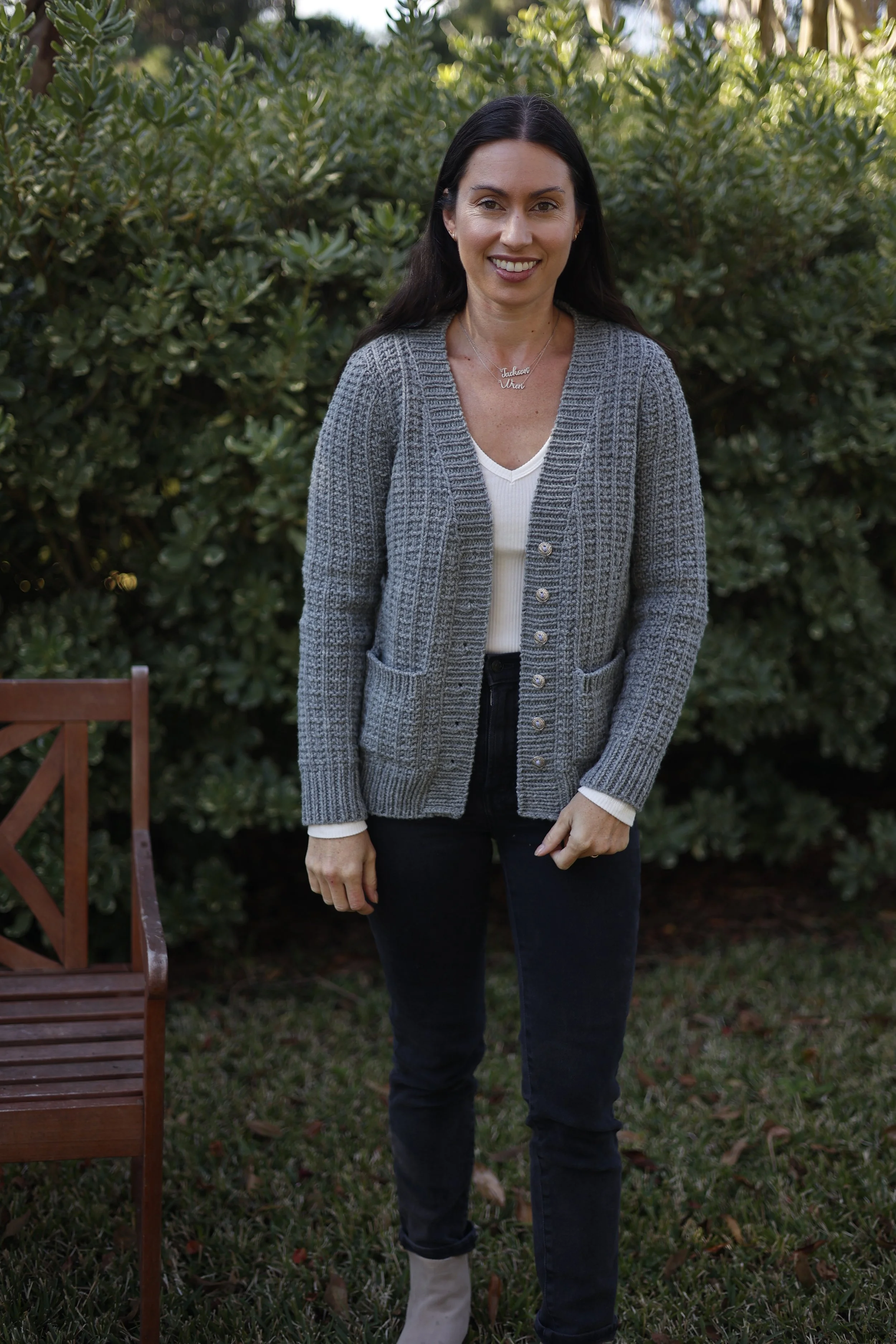
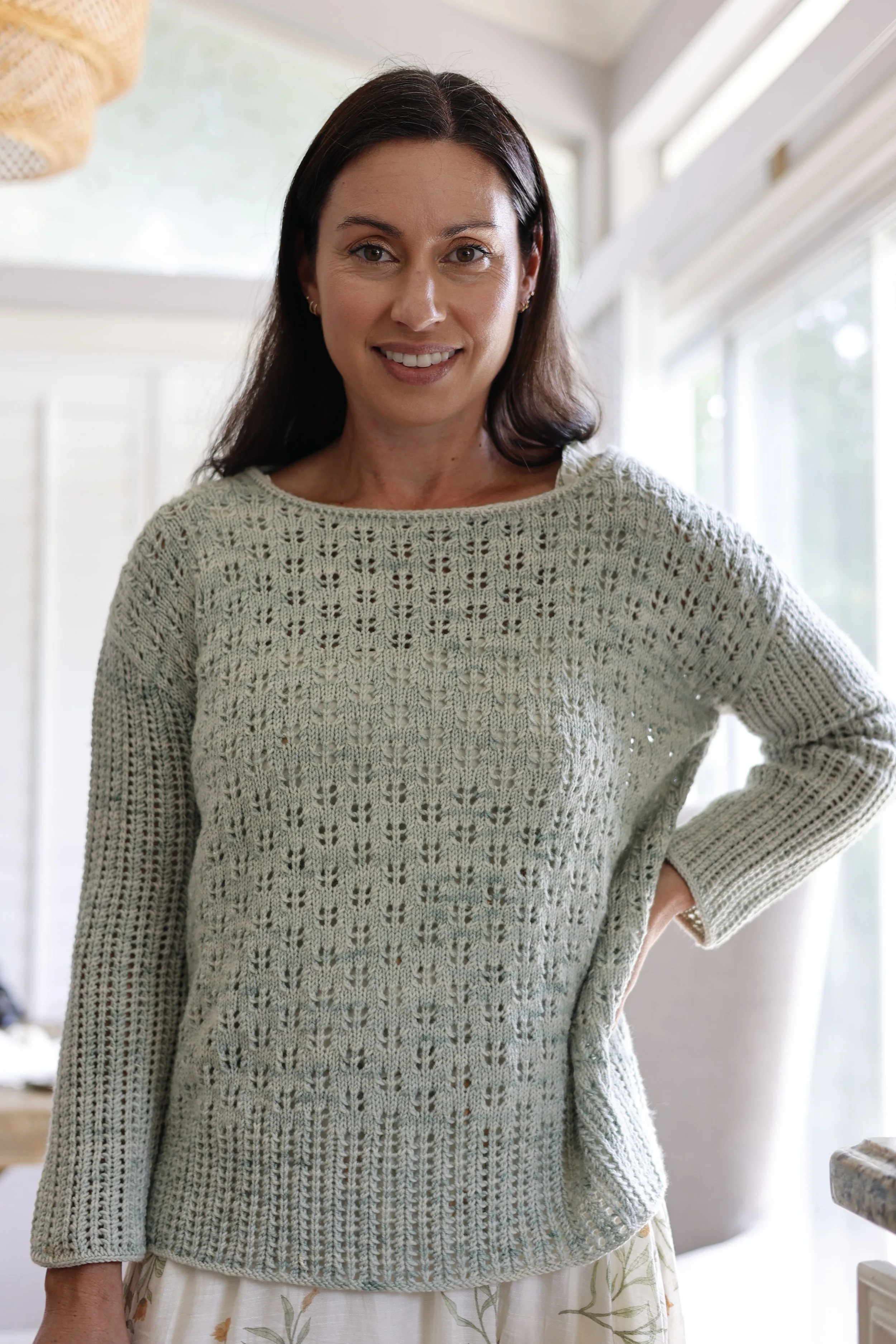
Sencillo — the easiest place to start. Cup shaping worked entirely in stockinette, so you can focus on the short-row technique itself without any competing stitch pattern.
Molsa — cup shaping and sleeve cap shaping, worked into a textured stitch pattern. A great next step once you've got the basic technique down and want to apply it somewhere a little more involved.
Tidal Creek — the most advanced of the three: cup shaping, sleeve caps, and lace all together. If you've worked short rows in the other two, this is where it all comes together.
No matter which one you start with, you'll walk away with real, practical experience customizing your own fit.
The digital pattern file is available instantly in the shop, so you can download it today and cast on this weekend. I genuinely love seeing any of these come off your needles. They're the kind of projects that feel just as good to make as they do to wear.
Browse the pattern collection →
Frequently Asked Questions
What are German short rows?
German short rows (GSR) are a method of working short rows using a "double stitch" instead of wraps — the stitch is slipped and the yarn brought over the needle, then later knit or purled together with its pair to close the row seamlessly, leaving a nearly invisible turn.
Why does my short row leave a hole?
A visible hole at the turn usually means the wrap or double stitch wasn't closed properly when you reached it again. With German short rows specifically, make sure you're knitting (or purling) both "legs" of the double stitch together as one — skipping this step is the most common cause of a gap.
Are German short rows better than wrap and turn?
Both methods work, but German short rows tend to create a cleaner, more invisible turn with fewer steps — there's no separate wrap to pick up later, which is why I use them across my patterns.
Why do two knitters in the same size get a different fit from the same sweater?
Standard pattern sizing accounts for overall measurements, but individual bodies vary in ways a single size can't fully capture. Cup shaping — worked using short rows — lets you customize the fit across your chest specifically, rather than relying on the base pattern size alone.
Do I need special tools to work short rows?
No special tools are required, though a stitch marker to flag your turning points and a row counter for longer shaping sequences can make the process easier to track.
The Daily Reset
Before you set aside your next pattern because it mentions short rows, give yourself ten minutes with some scrap yarn instead. Work one double stitch. Close it. That's the whole skill. Everything else is just repetition.




Learn how to substitute yarn in a knitting pattern step by step — what actually matters for fit, gauge, and drape when your original yarn is unavailable.