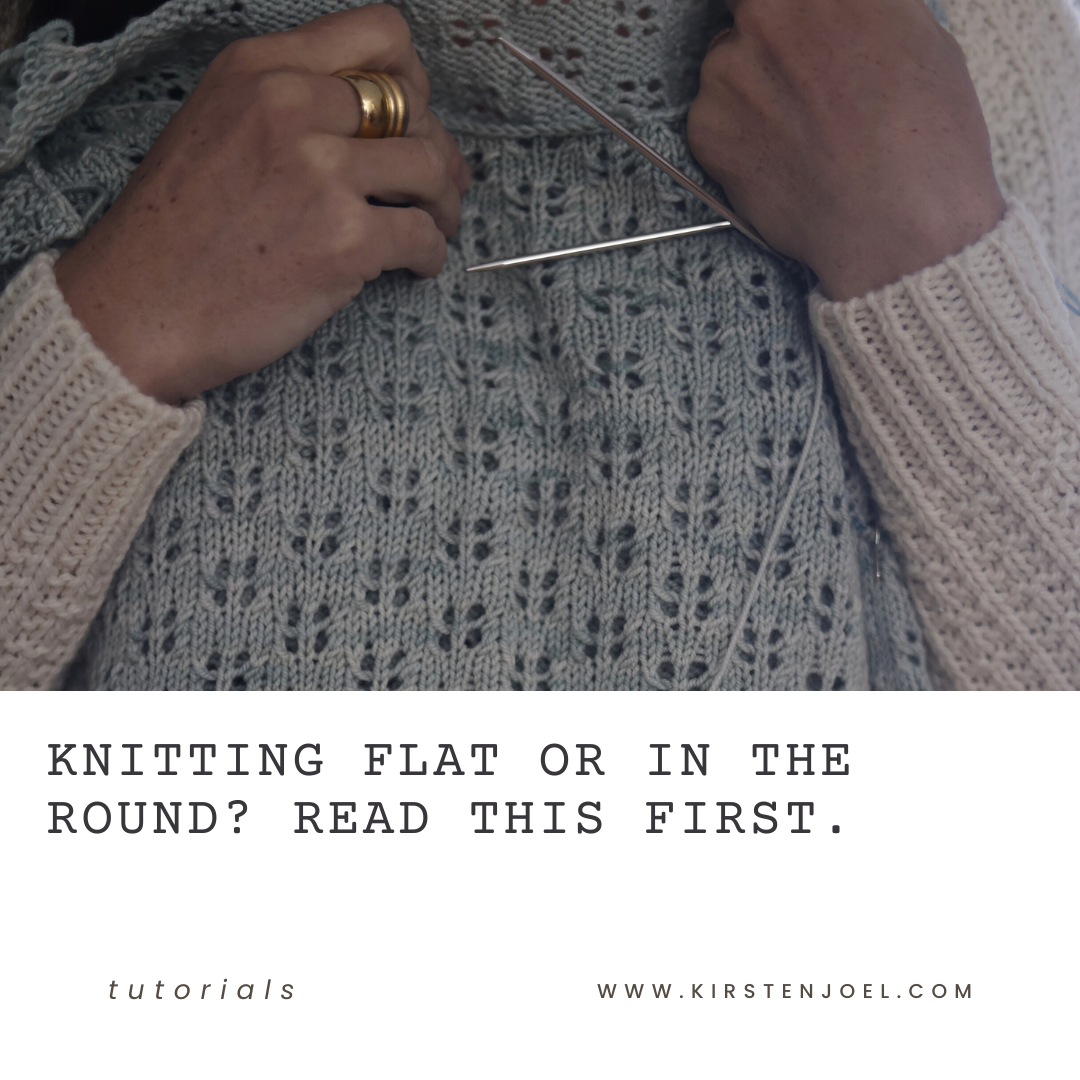
You’re finally ready to cast on a sweater, and whether it’s your first or fiftieth, you have a decision to make. Are you looking for a seamed sweater - where you knit the garment in pieces and sew it up later - or do you want to cast on something seamless? The knitting community is often divided on which of these is the better construction, but I argue that a hybrid approach is perfect. Seam the parts of the sweater that get the most wear + tear and go seamless everywhere else.
This journal post will walk you through the benefits of each method, some things to watch out for, and a few quick tips sprinkled throughout. I’ll help you choose a pattern that suits your lifestyle, adds fits calmly into your knitting time.
Benefits of Knitting Flat and Seaming: Structure and More Control
easier to read patterns and fix mistakes
easier to manage stitch repeats
easy to modify: If you need to add or remove length, say in the length of the body or the depth of the armhole, it can be much easier to do this in a seamed knit. If you need to rip back or adjust something, there’s less work to go back and re-do than if it were seamless.
more portable: Because you like to knit whenever and wherever possible, it’s easier to knit your garments in pieces. This makes them super portable; you can tuck them in your purse and squeeze in a few rows on your lunch break or the school pick-up line. Not to mention, seamless sweaters can get heavy fast, especially if you are also work sleeves in the round from the armhole down to the cuff. By knitting in pieces, you’ll have less weight in your lap.
increased sweater longevity + durability
better structure and stability in your sweater’s sleeves + shoulders: I'd recommend seaming your wardrobe staples so they can be hard-wearing and stand up to your jam-packed schedule. If you want to make a seamless sweater, you can still create faux seams to add in extra stability
joining new yarn and weaving in ends: When you need to start a new ball of yarn, start it at the selvage edge. When you’re done knitting & your pieces are seamed together, you can easily weave your ends into the selvage on the WS.
What to Watch Out for When Seaming Sweaters
If you’re new to seaming, it can feel time-consuming.
Take your time when seaming and make sure to block your seams to ensure they are even and lay flat
You might have more ends to weave in as you cut the yarn to start the next piece. Check out my quick tip below to minimize your yarn tails.
A Quick Tip if You’re Going to Make a Seamed Sweater
If you leave a long tail before you cast on and you can use that as your seaming thread, you’ll have one less end to weave in. Make it 3 to 4x the length of the edge you'll be seaming and you’ll have enough yarn to complete your seam.
If you like Seaming, you’ll like these projects:
Design Information
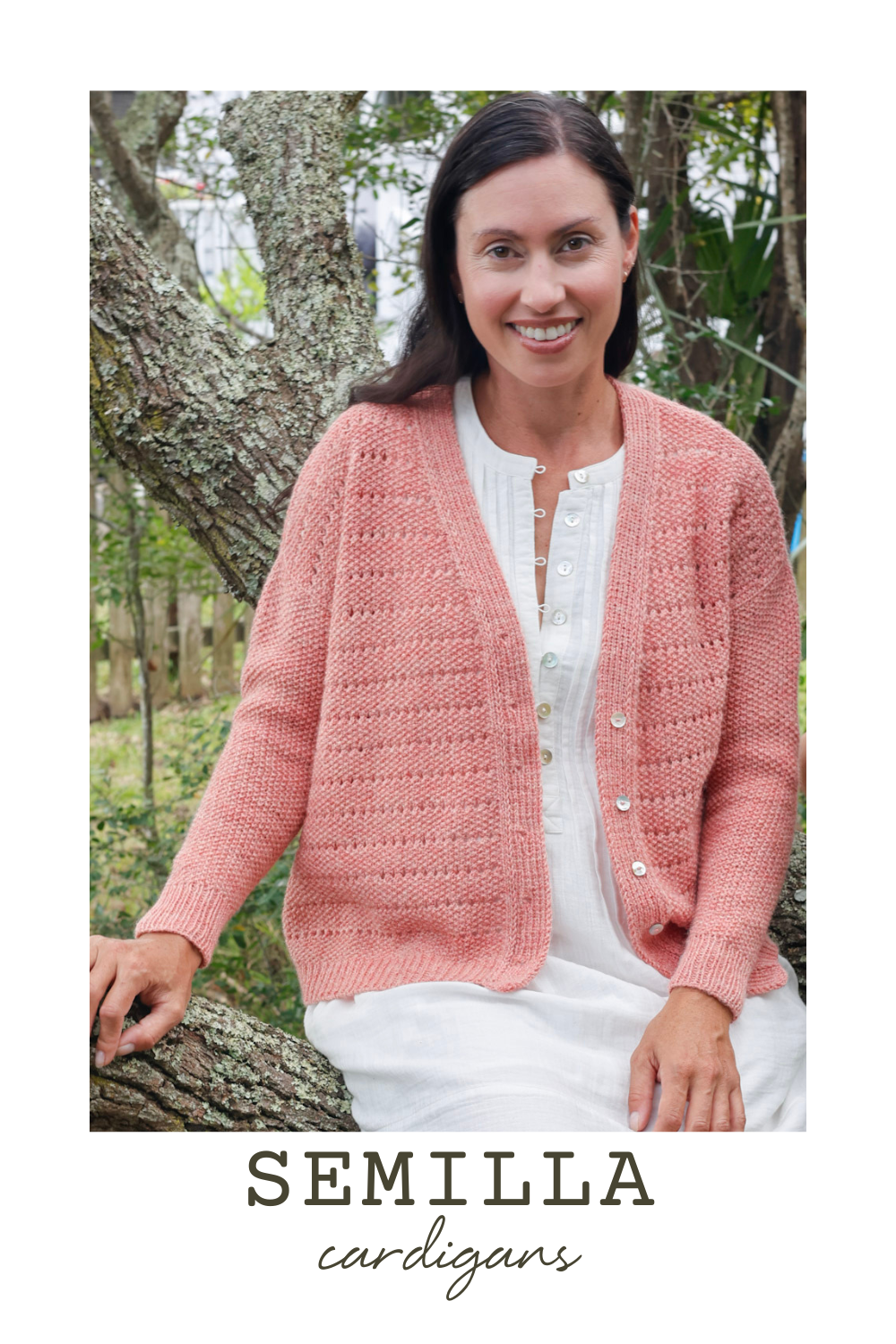
The Semilla Cardigan is a bottom-up, seamed v-neck cardigan featuring an all-over seed stitch and eyelet lace pattern. It includes classic 1x1 ribbing at the hems and button band, and a modern, updated cropped length. The back and front pieces are worked flat and seamed. Armhole shaping maintains a consistent drop shoulder seam location across all sizes. The drop shoulders are shaped with a sloped bind-off, and instructions are provided for optional cup shaping using short rows. The v-neck is designed to be flattering and slightly flirty without being too revealing.
Once the body pieces are completed and seamed, stitches are picked up around the armhole and worked from the bicep to the cuff in the round with a few short rows to create a gentle cap for an optimal fit and easy movement in the underarm.
Stitches are picked up around the neckline to work one of two button band options: horizontal or vertical, both in a 1x1 ribbed stitch. The Fronts are slightly wider than the Back when the button band is added to help prevent any gaping issues at the chest.
The pink sample features a vertical button band and is knit with Purl Soho Good Wool, a 100% Andean highland wool known for its toastiness, classic appearance, soft texture, gentle bloom, and beautiful heathered colors.
Wear this on-trend, yet secretly classic cardigan with chic trousers for an office party, or wear it as a cozy layer at home with shearling slippers and comfy joggers. However you wear it, the Semilla Cardigan will be a delightful addition to your everyday handmade wardrobe.
Please share your progress on Instagram by tagging me @kirstenjoel_designs and using the hashtags #semillacardigankjd. I love to see all of your works in progress and finished projects!
Design Information
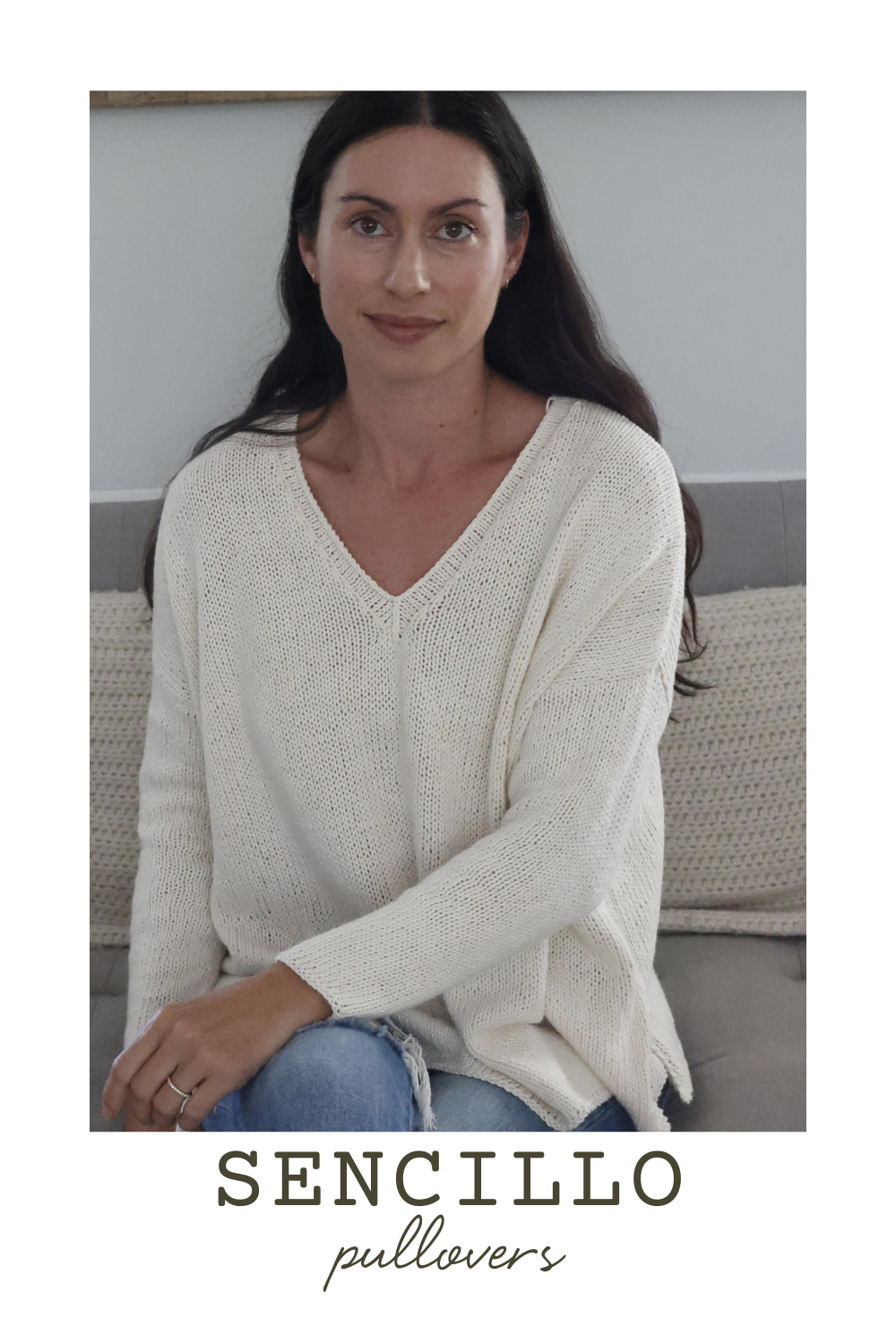
Sencillo is the Spanish word for “simple,” and this pullover & tee set is delightfully simple with the right amount of thoughtful details to nail that effortless fit. The easy shape, classic v-neck, and scoop neck options, and casual drop shoulders combine to create a perfect three-season pullover or tee. Knit in a dk-weight cotton & linen blend, you’ll find yourself reaching for the pullover or tee when you just want to look and feel good.
Sencillo is worked flat in pieces from the bottom up with side slits trimmed in garter stitch. Worked in Stockinette stitch, Sencillo features two neck opening options - a classic v-neck that is the perfect depth for summer and a flirty yet functional scoop neck.
Armhole shaping keeps the drop shoulder seam location consistent across the size range. The drop shoulders are shaped with a sloped bind off, and instructions are provided for optional cup shaping with short rows.
Once the pieces are completed, blocked, and seamed, stitches are picked up around the neckline to work the stockinette stitch neckband. There are cleverly placed decreases in the neckband to keep it from rolling.
The summer-friendly samples are knit with Knit Picks CotLin, a 70% cotton, and 30% linen blend dk-weight yarn perfect for spring, summer, and fall wear. Wear the pullover under a denim jacket for cool spring evening walks, or wear the tee over your favorite pair of jeans or shorts for a summer luncheon.
The Pirouette (Purple) sample features short sleeves, cup one bust shaping, and the scoop neck option. The Swan (White) sample features long sleeves, cup one bust shaping, and the v-neck option.
The fall-friendly samples are knit with Purl Soho Knitting Yarn, a 100% merino wool dk-weight yarn that is soft, sturdy, and delightfully springy. You’ll want to wear this sweater on your way to get your favorite latte. Or any day, really.
The North Sea (Navy Blue) sample features short sleeves and the scoop neck option. The Acorn Brown (Brown) sample features long sleeves and the v-neck option.
The Sencillo Pullover & Tee set will be a must-bring wherever you're headed. Please share your progress on Instagram by tagging me @kirstenjoel_designs and using the hashtags #sencillopulloverkjd and #sencilloteekjd. I love to see all of your works in progress and finished projects!

Design Information
Your Slipover is a bottom-up, seamed vest featuring an allover mock cable pattern, split side seams, and classic 1x1 ribbing at the hem, armholes, and neckband. Your Slipover is worked flat, back and forth in rows from the hem to the shoulders. The classic armhole shaping leaves room for movement and the high crew neck is flattering while allowing for multiple layering options.
Once the slipover is completed and blocked, stitches are picked up around the neckline and armholes to work the 1x1 ribbing.
The sample is knit with Knit Picks Wool of the Andes Worsted, a 100% Peruvian wool yarn that is perfect for all your cold weather layering needs. You’ll find yourself pairing this with high waisted jeans, pencil skirts, and chic trousers for office wear over a delicate blouse.
With its classic stitch pattern and comfortable fit, Your Slipover will be a thoughtful addition to your everyday handmade wardrobe.
Please share your progress on Instagram by tagging me @kirstenjoel_designs and using the hashtag #yourslipover. I love to see all of your works in progress and finished projects!
Benefits of Knitting in the Round: Flow State
No seaming for faster finishing and an easy polished look
Faster to knit Stockinette stitch in the round: eliminating purl rows often increases knitting speed and evens out tension and row gauge issues.
Can make complicated lace stitch patterns simpler since you don’t need to think about p2tog or p2togtbl
If you’re knitting from the top down, you can try it on as you go (just make sure to block it for an accurate assessment)
What to Watch Out for When Knitting Sweaters in the Round
Knitting can start to feel a bit monotonoous, espeically with large sections of Stockinette stitch
Managing double pointed needles (DPNs) or using the magic loop method can feel intimidating
If you like knitting in the round, you’ll like these projects:

Design Information
The Sister Peplum draws inspiration from the supportive bonds of sisterhood and community, evoking the quiet resilience of women who navigate the demands of life, family, and society with grace. Each eyelet accent underscores the softness within, serving as a tangible reminder to pause, take a breath, and gradually return your body and mind to a state of calm amid the ebb and flow of daily tides.
Sister is a top-down, double v-neck tank featuring delicate eyelet accents at the neckline, armhole, waist, and hem. It's worked flat, back and forth in rows, from the shoulder cast-on to the armhole shaping, where stitches are joined for working in the round. Stitches are decreased for flattering shaping from the upper chest to the waist, and then increased from the waist to the high hip to create the peplum silhouette. Once the body is completed and blocked, stitches are picked up around the neckline and armholes to work the eyelet trim. With its delicate lace accents and comfortable fit, Sister will be a thoughtful addition to your everyday handmade wardrobe.
Measuring for a comfortable, modern fit across 12 sizes, it's designed for sport-weight yarn like Cascade Ultra Pima Fine, knit on US 3-5 needles for a smooth gauge that's quick to knit in 1-2 hour sessions.
Cascade Yarns Ultra Pima Fine is a 100% Pima cotton sport-weight yarn (136 yards/50g) that's special for its silky smoothness, excellent stitch definition, and breathable lightness—creating a fabric that's soft against the skin with a subtle sheen and durability that withstands washing without losing shape.
For the Sister Peplum, Ultra Pima Fine works exceptionally well: its fine gauge enhances the eyelet accents' delicacy and peplum's flare, providing a refined, non-itchy drape that's perfect for warm-weather wear, while blooming beautifully after blocking to create an elevated, everyday tank.
Please share your progress on Instagram by tagging me @kirstenjoel_designs and using the hashtag #sisterpeplum. I love to see all of your works in progress and finished projects!
Other Articles You Might Find Helpful:
The Ultimate Guide to Circular Knitting Needles
What is Row Gauge & Why Does it Matter?
How to Swatch & Why You Should
How my Knitting Patterns Combine the Best of Both Flat and Seamed Knitting
Most of my garment patterns, like the Semilla Cardigan, feature a body knit flat and seamed for stability—shoulder seams support arm movement, side seams prevent sagging, and they stand up to tugs from little hands. Then, I add a clever twist: Sleeves start by picking up stitches around the armhole, with short rows for a gentle cap, but knit in the round from bicep to cuff. This hybrid approach makes length adjustments easy and ensures a perfect fit in the modified drop shoulder. It’s the perfect blend of structure and seamless flow.